Key Takeaways
- West Virginia motorcycle claims often turn on comparative fault under §55-7-13c, helmet compliance under §17C-15-44, and preservation of early evidence.
- The standard deadline is two years under §55-2-12; wrongful death uses §55-7-6
- Minimum coverage is 25/50/25, so UM/UIM under §33-6-31 often determines recovery
- No reliable primary source publishes average WV motorcycle settlement values. Be skeptical of any firm that quotes a range.
What to Do in the First Hours After a WV Motorcycle Crash
Motorcycle crashes move quickly. The scene clears, evidence disappears, and insurers can start calling within a day. What you do in the first few hours can affect how the claim develops later.
West Virginia law requires drivers involved in a crash that results in injury, death, or significant damage to stop and remain at the scene. Information must be exchanged, aid provided, and law enforcement notified when required under § § 17C-4-1, 17C-4-3, and 17C-4-6. Leaving can turn the situation into a hit-and-run issue.
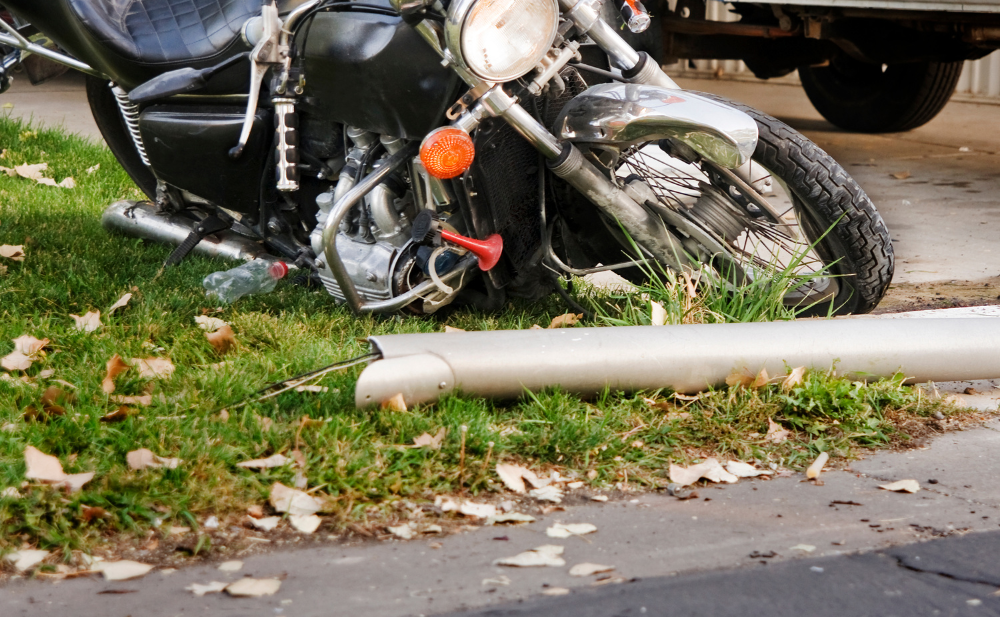
Before anything is moved, document what you can. Photograph the motorcycle, your gear, and the scene. Get witness names and contact details while they are still there. The official crash report may take time, so early documentation often becomes the starting point for the claim.
Avoid repairing or disposing of the motorcycle and gear right away. Those items can serve as physical evidence. Once they are altered or gone, they cannot be reviewed later.
Injuries Common in Motorcycle Accidents
Motorcycle injuries tend to differ from other vehicle crashes. Riders have less protection, and the impact often transfers directly to the body. Some injuries, particularly internal trauma and brain injuries, may not show symptoms immediately after the crash.
Common motorcycle-related injuries include:
- Road rash and skin injuries, which can range from surface abrasions to deep wounds requiring grafting
- Traumatic brain injuries, even when a helmet is worn, include concussions and more severe head trauma.
- “Rider’s arm” injuries, involving damage to the brachial plexus when the arm absorbs impact during a fall
- Fractures and crush injuries, particularly to the legs, ribs, and collarbone
- Spinal injuries, including herniated discs and more serious spinal cord damage
- Internal injuries, which may not show symptoms immediately, but can become serious within hours or days
These injuries often require longer recovery and more documentation than standard crash claims. How they are diagnosed, treated, and recorded plays a significant role in evaluating the claim.
Why Immediate Medical Care Matters More for Riders
A rider walking away from a crash does not mean the rider is uninjured. Adrenaline can delay symptoms of concussions, internal bleeding, and neck injuries. In some cases, issues appear hours or even days later.
Getting checked the same day matters. A delay in treatment can create questions about when the injury occurred. If care is delayed, it becomes easier to challenge the claim on causation.
Be clear about all symptoms, not just the obvious ones. Motorcycle crashes often involve injury patterns that are not immediately visible, including road rash that worsens over time, head injuries even with a helmet, and nerve damage such as “rider’s arm.”
Follow through with treatment. Missed appointments or gaps in care can affect how the injury is viewed. Insurance files often rely on consistency, and interruptions in treatment may be interpreted as a recovery.
Keep copies of medical records, imaging, and bills. A clear link between the crash and the diagnosis is what supports the claim.

The West Virginia Motorcycle Laws That Actually Decide Your Claim
Four statutes show up in nearly every WV motorcycle case. Getting them right matters more than most other legal details on the page.
Universal Helmet Law [WV Code §17C-15-44]
West Virginia is a universal-helmet state. Every operator and passenger must wear a securely fastened helmet that meets ANSI Z90.1, DOT FMVSS No. 218, or Snell standards, plus qualifying eye protection. The statute also contains an enclosed-autocycle exemption. A 2024 bill, HB 4456, proposed removing the helmet and eye-protection requirements, but it did not pass, and §17C-15-44 still controls.
A helmet violation is not an automatic bar to recovery. It has to be tied to causation and to the specific injury before it reduces damages. A missing helmet is relevant in a head-injury case. It is much less relevant in a fractured-leg case.
Modified Comparative Fault [WV Code §55-7-13c]
West Virginia bars recovery only when the injured person’s share of fault is greater than 50 percent of the combined fault of all other responsible persons. If the jury puts you at 30 percent and awards $100,000, you walk away with $70,000. Cross above the 50 percent threshold, and you recover nothing. That is the rule. The statute text uses the “greater than 50 percent” phrasing; the older shorthand you will sometimes see on competitor sites is less precise.
Statute of Limitations [§55-2-12 and §55-7-6]
The general deadline for a motorcycle injury claim is 2 years from the date of the crash under §55-2-12. If the crash caused a death, wrongful death claims have their own two-year clock under §55-7-6, and that clock runs from the date of death rather than the date of injury. Minors, out-of-state defendants, and fraud concealment can all affect how the clock runs, but the safe planning window is two years.
Punitive Damages Cap [WV Code §55-7-29]
Punitive damages in a WV motorcycle case are capped at the greater of four times compensatory damages or $500,000. They are only available when the defendant’s conduct is more than ordinary negligence.
Who Else Can Be Held Liable Besides the Other Driver
Liability in a motorcycle crash is not always limited to the driver involved. In many cases, responsibility extends to other parties depending on how the incident occurred and the conditions at the time.
Potentially responsible parties may include:
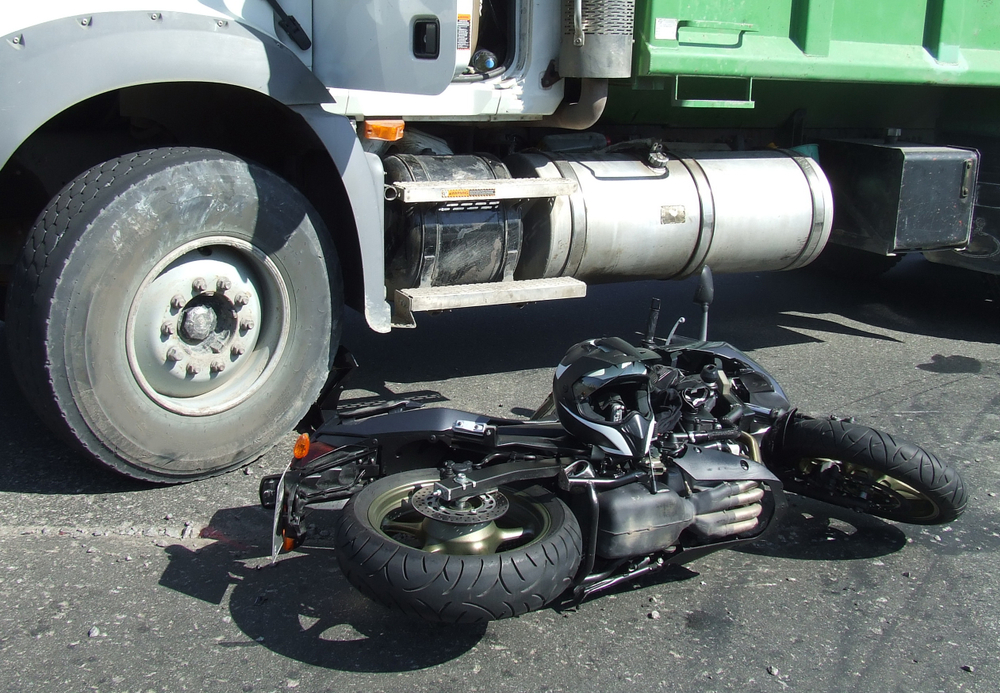
- Commercial employers, when the driver was working at the time of the crash, including delivery, contractor, or industrial vehicles
- Manufacturers or repair providers in cases involving equipment failure, such as tire blowouts or brake issues tied to defective motorcycle or vehicle claims
- Government entities or contractors where road conditions, design, or maintenance played a role are subject to timing rules under §29-12A-6 and notice requirements under §55-17-3
- Passengers, who may have independent claims and are typically not at fault, as explained in our page on motorcycle passenger accident legal rights
Each situation depends on how the facts develop and which legal framework applies. Identifying all responsible parties early can affect how the claim is structured and what recovery may be available.
How West Virginia Motorcycle Insurance Actually Works
West Virginia requires minimum auto liability coverage of 25/50/25 under §17D-4-2. That means $25,000 per person for injury, $50,000 per accident total, and $25,000 for property damage. In a serious motorcycle crash, those limits are often exhausted quickly.
For many riders, the at-fault driver’s policy is only part of the picture. Uninsured and underinsured motorist coverage (UM/UIM) becomes more important in real claims. Under §33-6-31, UM coverage is required at the same 25/50/25 limits, while UIM coverage is optional but must be offered by the insurer.
Riders who carry higher UIM limits, such as 100/300/100, typically have more protection when the at-fault driver’s coverage falls short. In practice, that additional coverage often determines how much compensation is actually available after a serious injury.
|
Coverage Type
|
WV Rule
|
Statute |
Practical Note
|
| Liability |
Mandatory at 25/50/25 minimum |
§17D-4-2 |
Often exhausted on a single serious motorcycle injury |
| Uninsured motorist (UM) |
Mandatory at 25/50/25 minimum |
§33-6-31 |
Applies to hit-and-run and uninsured at-fault drivers |
| Underinsured motorist (UIM) |
Optional, but insurer must offer |
§33-6-31 |
Can be purchased up to the policy liability limits |
| MedPay |
Optional |
N/A |
Covers medical bills regardless of fault, useful for riders |
Hit-and-run crashes fall under UM. Denied claims often end up in bad-faith territory. When the carrier refuses to pay despite clear liability, an insurance claim attorney for denied motorcycle claims can move the claim out of adjuster review and into litigation.
Keep the declarations page. The policy itself, not what the adjuster describes on the phone, controls coverage. An adjuster’s phone summary is not binding.
What Your WV Motorcycle Claim Is Actually Worth
There is no reliable “average” settlement for a West Virginia motorcycle accident. Outcomes vary widely based on the facts of the crash, the severity of the injuries, and the available insurance coverage. Any fixed range you see published without context is usually not tied to how claims are actually evaluated.
Economic damages cover the measurable losses. That includes medical bills incurred to date, future treatment, lost wages, and any reduction in earning ability. It also includes repair or replacement of the motorcycle and riding gear, which can be significant depending on the bike.
Non-economic damages address impacts that do not appear on a bill. Pain, scarring from road rash, emotional strain, and limits on daily activities are part of this category. These are supported by medical records, treatment history, and the injury’s effect on normal function.
Punitive damages are less common and apply only when the conduct goes beyond ordinary negligence, such as drunk driving or intentional wrongdoing. When they are awarded, they are subject to the cap under §55-7-29.

Mistakes That Kill Motorcycle Claims
Certain mistakes after a crash can quickly reduce the value of a motorcycle claim. They need the rider to hand them the win.
A few patterns show up repeatedly:
- Apologizing at the scene. “I am so sorry, I did not see them” becomes a recorded admission against interest by the time the claim is open.
- Giving a recorded statement to the other driver’s insurer without an attorney. These calls exist to lock a rider into a story before the medical picture is fully developed.
- Skipping follow-up appointments. Every gap in treatment reads as recovery.
- Posting on social media. Adjusters pull public Facebook, Instagram, and TikTok. A single post at a cookout in a neck brace is used to argue that the injury is cosmetic.
- Letting the bike be repaired or scrapped before the council inspects it. The motorcycle is physical evidence, not a transportation problem.
- Accepting an early “goodwill” offer before the full medical picture is documented. The adjuster’s best pricing is almost always before the MRI comes back.
None of these errors are about intelligence. They are about the pace of the first few weeks after a crash. Having legal representation early in a vehicle accident slows the process.
How Long a WV Motorcycle Accident Claim Takes
There is no fixed timeline, but most claims fall within these general ranges.
Claims with clear fault and complete medical records may resolve in a few months. When liability is disputed, injuries are severe, or multiple parties are involved, the process often extends beyond a year. Litigation adds additional time, especially where expert review or reconstruction is required.
Timing is also tied to medical progress. Claims are usually evaluated after treatment reaches a stable point, so the full impact of the injury is known. Moving too early can leave out future care and reduce the overall value.
Because of this, the pace of a claim is shaped by both the facts of the crash and how the case develops over time.
Frequently Asked Questions About WV Motorcycle Accident Claims
How long do I have to file a motorcycle accident claim in West Virginia?
Most claims must be filed within two years of the crash under WV Code §55-2-12. If the accident results in death, a separate two-year period applies under §55-7-6, measured from the date of death. While certain factors can affect timing, most cases follow that two-year window.
What if I were partially at fault for the motorcycle accident?
West Virginia follows a modified comparative fault rule under §55-7-13c. You can still recover damages as long as your share of fault does not exceed 50 percent. Any award is reduced by that percentage. If your share goes above 50 percent, recovery is not permitted.
Can I recover if the at-fault driver was uninsured or underinsured?
Yes. Your own uninsured or underinsured motorist coverage may apply. WV Code §33-6-31 requires uninsured coverage at minimum limits and requires insurers to offer underinsured coverage. In many cases, that coverage becomes the primary source of recovery when the other driver’s limits are not enough.
Does not wearing a helmet affect my claim in West Virginia?
Not by itself. West Virginia’s helmet law under §17C-15-44 applies, but it must relate to how the injury occurred. A head injury may cause damage. In other types of injuries, it often has little impact.
How much is my motorcycle accident case worth?
There is no fixed “average” for motorcycle claims in West Virginia. Value depends on liability, the extent of the injuries, lost income, available insurance, and any long-term effects. Each case is evaluated on its own facts rather than a standard range.
Who pays if a road hazard, not another driver, caused my crash?
Road-condition and construction-zone cases may run against state agencies, political subdivisions, or maintenance contractors. Timing rules in §29-12A-6 and the pre-suit notice rule in §55-17-3 are short. These cases need a fast investigation.
What if my motorcycle itself were defective?
Tire failures, brake defects, and ABS malfunctions can pull the manufacturer or repair shop into the case. Preserving the bike in post-crash condition is non-negotiable for defective-product claims.
Do I have to give the other driver’s insurer a recorded statement?
No. You are not obligated to give a recorded statement to the other driver’s insurer. These calls are used to lock in a version of events before your medical picture is complete. Route the call to your attorney.
What damages can I recover in a WV motorcycle claim?
Economic damages cover medical bills, lost wages, reduced earning capacity, motorcycle, and gear replacement. Non-economic damages cover pain and suffering, disfigurement, and loss of enjoyment of life. Punitive damages may apply in egregious cases and are capped under §55-7-29.
Do I need a lawyer for my motorcycle accident claim?
Minor property-damage-only claims sometimes do not. Anything involving injury, a disputed police report, a carrier that is slow-walking the file, or a policy-limits problem usually does. First consultations are free.
Can I still recover if I am from out of state but was riding in WV?
Yes. West Virginia law applies to crashes that happen on West Virginia roads. Out-of-state riders typically file here, and the WV two-year limitations period controls.
Talk to a West Virginia Motorcycle Accident Lawyer
Motorcycle claims depend on how early the facts are secured and how the case is built. Delays can reduce the available support for the claim and limit its development over time.
In West Virginia, motorcycle crashes continue to result in serious injuries and fatalities each year, according to state and federal safety data. Behind every case is a set of medical decisions, insurance issues, and documentation that begins almost immediately after the crash.
Manchin Injury Law Group handles motorcycle cases from our Fairmont, Morgantown, and Martinsburg offices. Riders in Monongalia County can start with our Morgantown accident attorney team. Consultations are free. No fees unless we recover. Call our Fairmont office at (304) 367-1862 or reach any of our three locations online.